

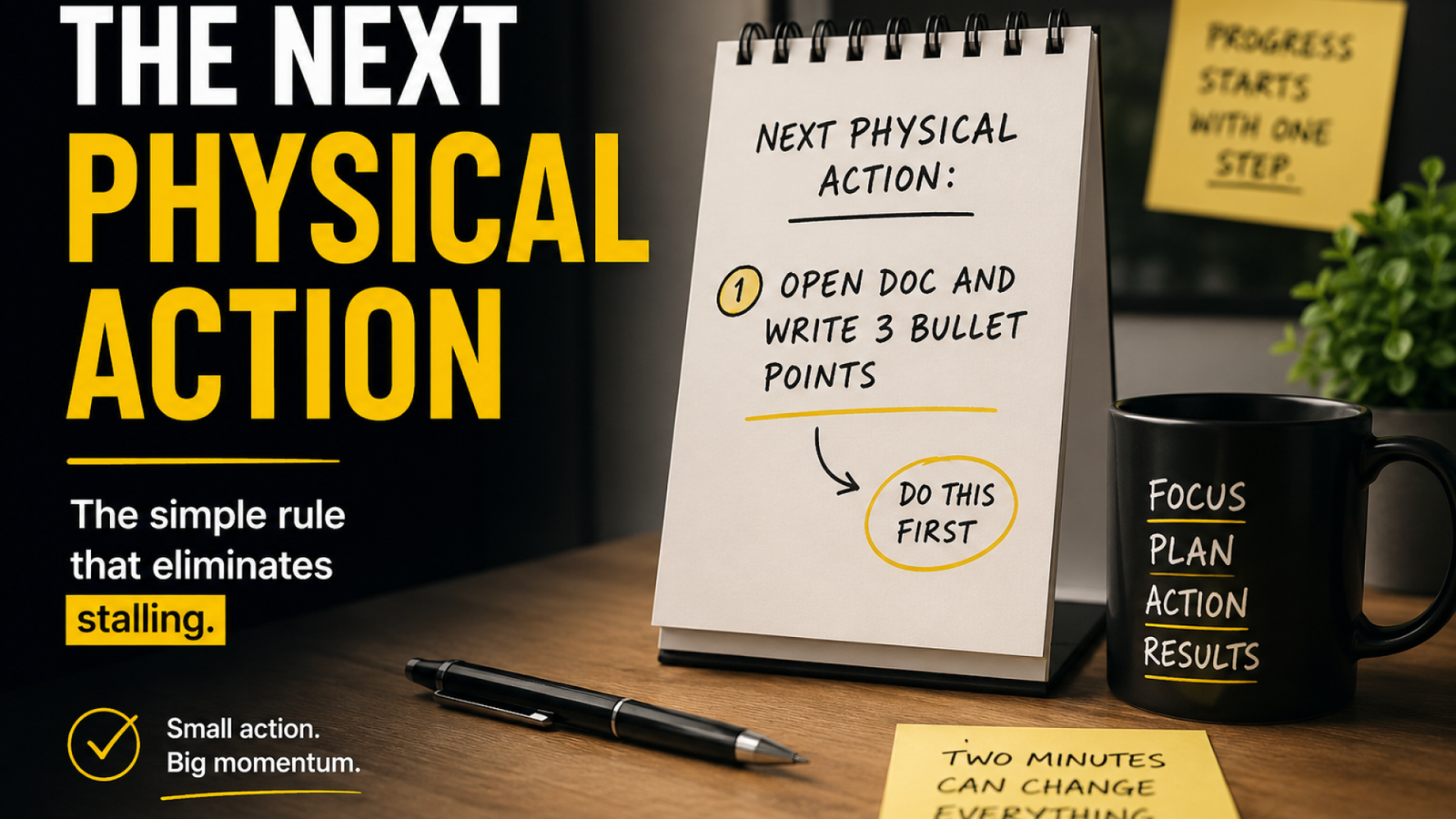
The next physical action is often the difference between a task that keeps getting postponed and one that finally gets moving. There’s an item on your list that’s been there for six days. You’ve rewritten it at the top every morning. “Finish the proposal.” It never moves.
Not because you’re avoiding it exactly, and not because you don’t have time. Every day you open the list, look at it, feel a small drop in your stomach, and open your inbox instead.
That drop is worth paying attention to. It isn’t laziness showing up. It’s your brain doing exactly what it’s built to do when it’s handed something vague and asking it to just start.
A task and a project are not the same thing
“Hire a new ops person” is not a task. It’s a project wearing a task’s clothing. Buried inside it are a dozen decisions your brain has to make before you post a single listing: what the role actually covers, whether you need someone senior or someone who can grow into it, where to post it, what the screening process looks like, who sits in on interviews. None of that is written down. All of it has to be silently resolved before you can act, and your brain treats that pile of unresolved decisions as effort it hasn’t agreed to spend yet.
So it stalls. Not on the hire itself, but on the size of the decision required just to begin. This is why that one line can sit on your list for weeks while smaller, far less important tasks get done same-day. Small tasks come pre-loaded with an obvious next move. Big ones don’t, and your brain will always take the path that costs less to start.
A physical action is the smallest unit your brain will actually accept
The fix isn’t motivation. It’s specificity. A next physical action is a literal, visible motion, something you could point to on a screen.
Not “figure out the hire,” but open a blank doc and write three bullet points on what the ops person would actually own in their first month. Not “sort out the process,” but open your notes app and type the one interview question you’d most want answered before making an offer. Not “get this moving,” but open your email and draft a two-line message to the one person in your network most likely to know a good candidate.
Each of those is something your body could physically do in the next two minutes, with nothing left to decide first.
This works because of how intention actually turns into behavior. Decades of research on implementation intentions, the psychologist Peter Gollwitzer’s term for pre-deciding exactly when and how you’ll act, shows that people who specify a concrete trigger and action follow through at dramatically higher rates than people who simply intend to do something. Vague intentions ask your brain to make the same stalling decision every time you look at “hire ops person” sitting on the list. A physical action removes the decision entirely. There’s nothing left to resolve. There’s only three bullet points left to write, or one message left to send.
This week’s experiment:
Pick the item on your list that’s been sitting the longest. Write its next physical action as a single sentence: a verb, an object, something you could do in under two minutes without opening a new tab first. Do that one motion before you do anything else today.
A question worth sitting with:
What is the very first physical motion this task is actually asking of you?
The task you’ve been putting off may not need more motivation. It may simply need a clearer starting point.
Take a look at the task that’s been sitting on your list the longest. Write down the smallest physical action you can take to move it forward, then do that one thing.
You don’t need to finish the entire project today. You just need to make the next move obvious.
Start your week with a clearer plan
If vague tasks and competing priorities are making it difficult to follow through, having a clear plan before the week begins can make a meaningful difference.
Download The Ultimate Weekly Planning Blueprint, a simple, one page tool designed to help you identify your most important work, protect your focus time, and start every week already ahead.
Use it before your next week begins, and turn your priorities into clear actions before Monday gets busy.
Until next Tuesday,
Stay intentional. Stay Productive.

